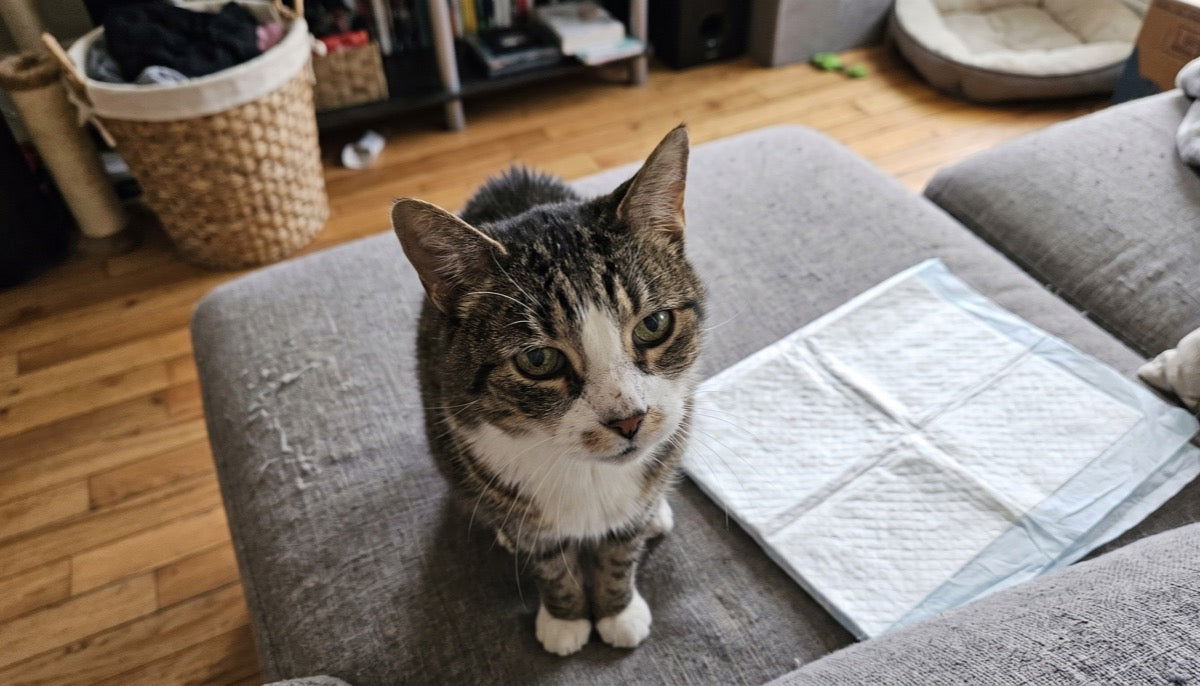
The Reason Some Senior Cats Suddenly Stop Using the Litter Box (And How To Fix It)
A Breakthrough Discovery reveals why a cat who used the box perfectly for 12 years suddenly can't, and why it has nothing to do with spite, dementia or old age
Dr. Emily Hartwell, DVM
Specialist in Feline Urology
October 7, 2026 • 9 min read
You've probably been told the same thing most cat owners hear when their senior cat starts peeing outside the box.
It's behavioral. It's his age. Maybe it's dementia. Try another litter box.
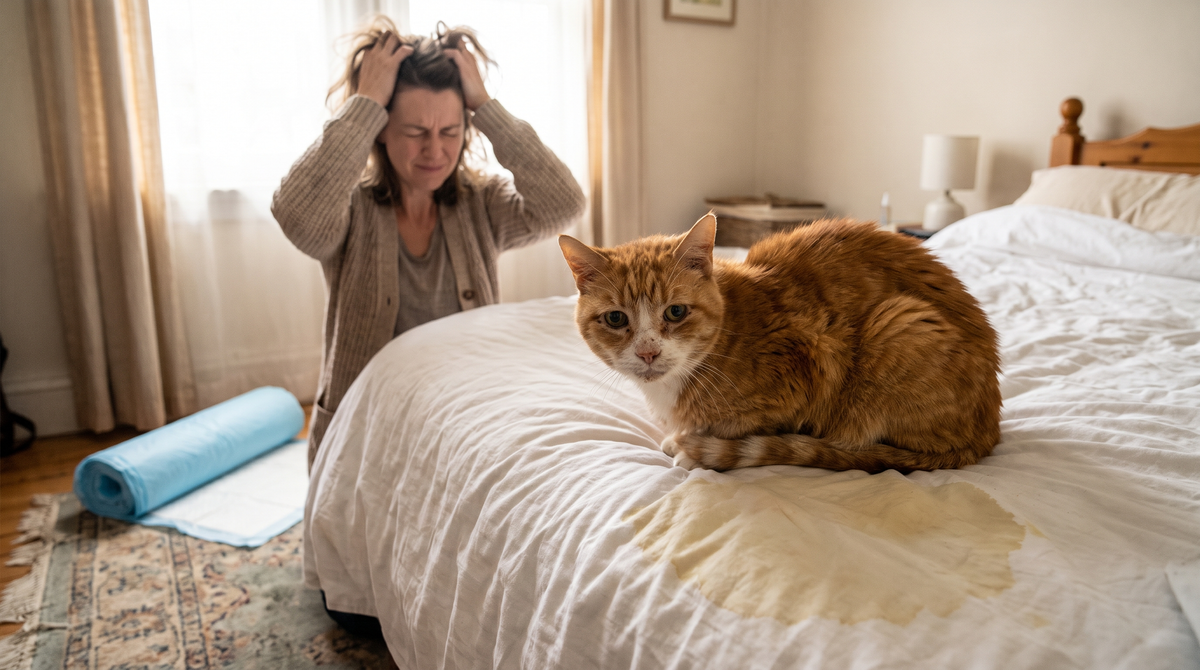
And when you're stripping the bed for the third time this week, or feeling something warm on your leg in the middle of the night... that explanation feels like a door closing.
But here's what that explanation leaves out:
Why it's happening in the first place.
Not "he's old." Not "he's acting out." The actual physical reason a cat who used the box perfectly for twelve years suddenly can't.
That part matters. Because that's where the difference gets made.
The Worn-Out Lining
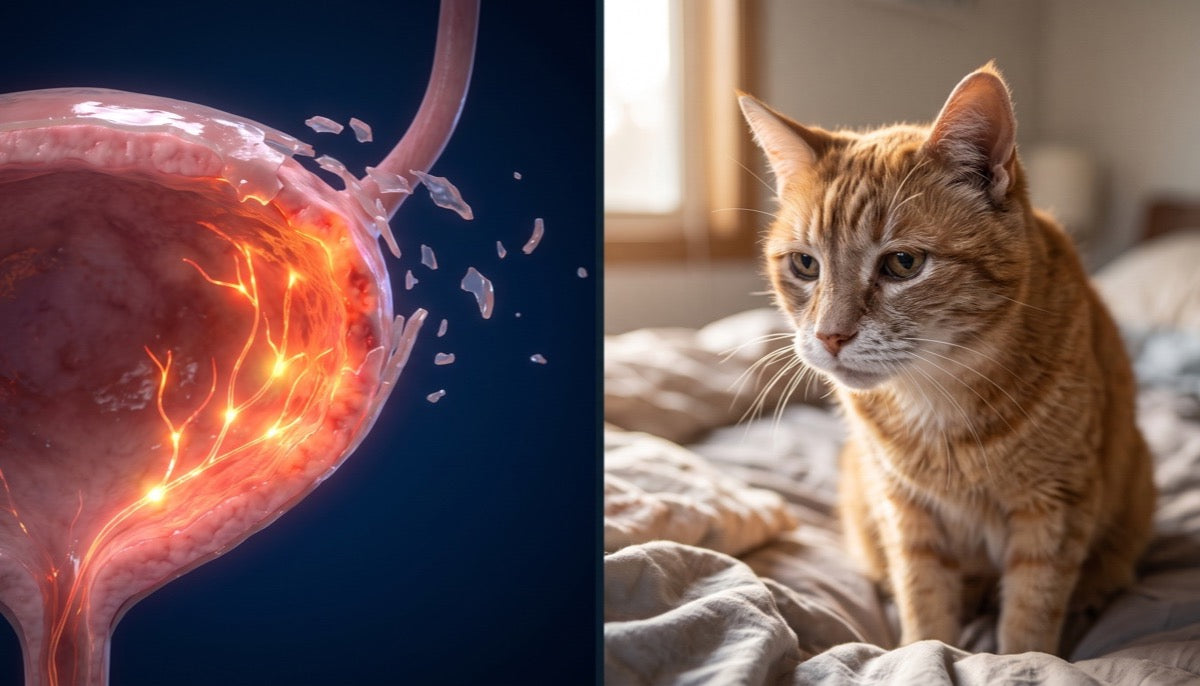
Every cat's bladder is coated on the inside with a thin protective layer called the GAG layer.
It's the raincoat on the bladder wall.
It's what keeps the acid in urine away from the sensitive tissue underneath, so a cat can hold his urine comfortably until he reaches the box.
When the GAG layer is intact, the bladder works.
But here's the catch:
The body rebuilds that layer constantly, and with age, it starts falling behind.
Researchers at a university in Tokyo ran bladder ultrasounds on 3,500 senior cats. In the cats that had started peeing outside the box, the GAG layer was up to 60% worn away.
That's not a small decline. That's a bladder trying to hold urine with half its armor gone.
And that wear maps directly onto every symptom you're watching:
Peeing on the bed or the couch: when the bladder wall is irritated, even a small amount of urine can create an intense urge to pee. The urge hits so fast that he goes wherever he is, and most of the day, he's on your bed or your couch.
Peeing right next to the litter box, or over the edge: he wasn't avoiding the box. He was trying to get there and didn't make it.
Peeing on laundry, rugs and bath mats: when going in the box feels uncomfortable, cats look for something soft and safe instead.
Peeing on the bed while you're in it: the place that smells most like you is the place he feels safest when his body is telling him something is wrong.
Every symptom has a physical explanation.
Which means the problem has a root.
And roots can be addressed.
What Your Vet Might Have Offered and Why It Falls Short
I'll be honest about what happens in exam rooms like mine.
We run the urinalysis. We run the bloodwork. The owner pays $600. Everything comes back clean. And then one of two sentences comes out of our mouths: "It's probably old age and cognitive decline." Or: "It's a behavioral issue."
I've said both. I was wrong both times.
And when owners push for something more, the standard prescription is:
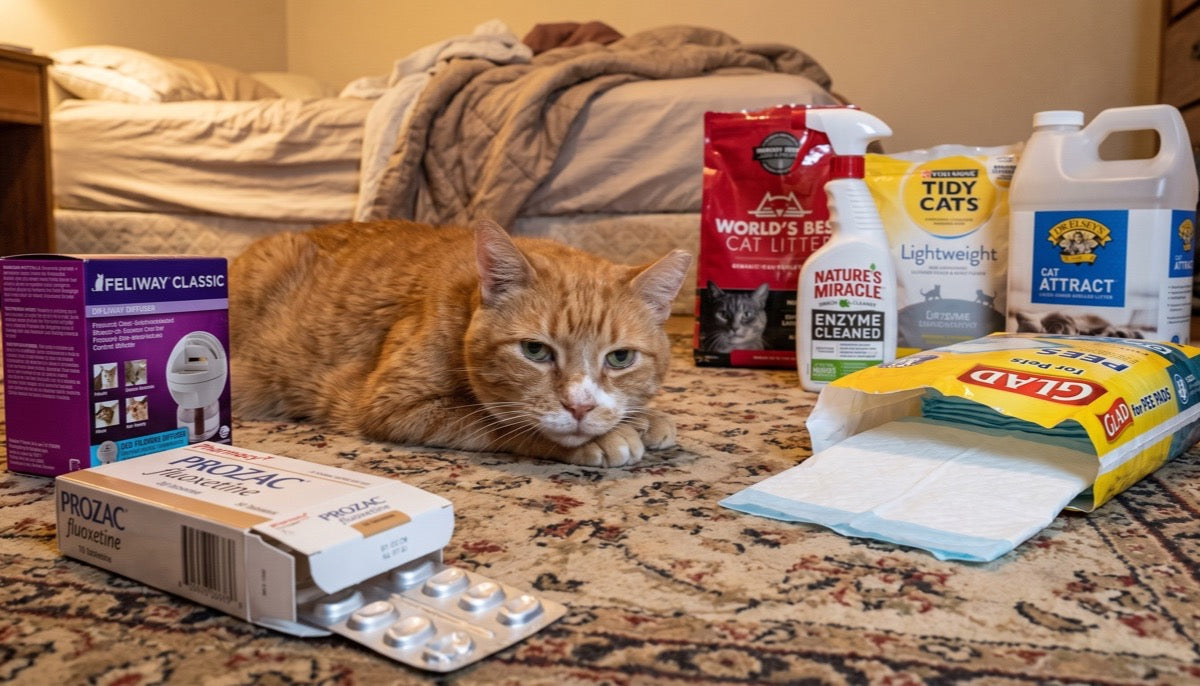
• Fluoxetine (Prozac) to reduce anxiety-driven urination (Some owners see real improvement, but calming the brain and repairing the bladder lining are different processes).
• And the at-home list: extra litter boxes, new litter, Cat Attract, Feliway diffusers, enzyme cleaners, pee pads and waterproof mattress covers.
None of this is wrong.
Some cats do respond to Prozac. Some do better with an extra box.
But look at that list again. Every single item assumes the same thing: that this is a behavior problem. That he's anxious, picky or marking. That if you calm his mind or change his box, he'll choose to go back.
But not one of them touches the GAG layer. And as long as that layer stays worn thin, every few drops of urine hit raw bladder wall, the urge keeps firing, and he keeps losing the race to the box.
No litter, no diffuser and no pill can rebuild a GAG layer. Only the raw material it's made from can.
Behavior fixes try to change where he pees. Rebuilding the lining changes whether he can make it in time.
Why Aren't Vets Talking About This?
This is the question that frustrates cat owners most when they find the GAG research.
Veterinary education is heavily structured around acute emergencies: urinary blockages, struvite stones, and bacterial infections.
When a urine culture comes back negative for bacteria, standard clinic protocols run out of pharmaceutical drugs to prescribe.
GAG layer restoration as an at-home nutritional protocol has not filtered into standard corporate practice yet.
There is no major pharmaceutical sales representative walking into clinic offices to explain bladder mucosa rebuilds.
The research exists.
The research
Veterinary studies published in the Journal of Feline Medicine and Surgery show that when cats are given N-acetyl glucosamine (NAG), their body uses it as a building block for the bladder's protective lining, helping that lining rebuild.
The owners who found this did not find it from a prescription pad.
They found it the same way you are finding it now.
By refusing to accept that living in an ammonia-scented home or putting their beloved companion down was their only option.
They kept looking past the first answer, past the litter changes, and past the online forums that said nothing could be done.
Picture a builder fixing a brick wall while a crew keeps knocking bricks out. As long as he has enough bricks, the wall holds.
That's your cat's GAG layer. Every day, urine and stress wear some of it away, and the body rebuilds it.
But a senior cat's body runs low on bricks. The wall wears down faster than it gets rebuilt. That's how a cat who used the box perfectly for twelve years suddenly can't.
The fix is more bricks. That brick is N-acetyl glucosamine. NAG, for short.
And the crew? That's stress. A vet visit, a move, a new pet, even the accidents themselves. So the lining needs both: more bricks, and a smaller crew.
Most urinary products use cranberry, which is aimed at infections these cats usually don't have. The formula behind the research approach uses NAG to rebuild and L-theanine, a calming amino acid, to take the edge off the stress that strips the layer.
One more thing most people don't consider: delivery format.
Pills and chews mean pilling a senior cat every single day. Most owners already know how that goes. The cat hides, fights, spits it out behind the couch.
And every fight is more stress, and more stress strips more lining.
A liquid works differently.
One dropper in his wet food. No pill. No wrestling. No fight.
The formula matters. So does how it gets in.
What to Realistically Expect
Before
After
This section matters more than any other, so let me be direct.
Rebuilding the lining is not a cure, and it is not instant.
What NAG support does is give the bladder the raw material to rebuild its protective layer, so a small amount of urine stops feeling like an emergency.
The lining doesn't rebuild overnight. Here is what owners typically watch for:
Weeks 1–2
Often nothing visible yet. The building blocks are starting to rise. This is when most owners are tempted to quit. Don't.
Weeks 3–4
Fewer urgent dashes. Bigger, more normal clumps in the box instead of lots of small ones. Fewer accidents near the box.
Weeks 5–8
The bed stays dry more nights than not. Owners start leaving the bedroom door open again.
Weeks 9–12
For cats who used the formula for 3 months, this is when owners say they got their cat back. Not a young cat again. Still a senior. But using his box, sleeping on the bed instead of in it, and part of the house again.
N-acetyl glucosamine (NAG), the building block from the Bangkok research
L-theanine to take the edge off stress
Liquid: one dropper in wet food, once a day
Made for cats only
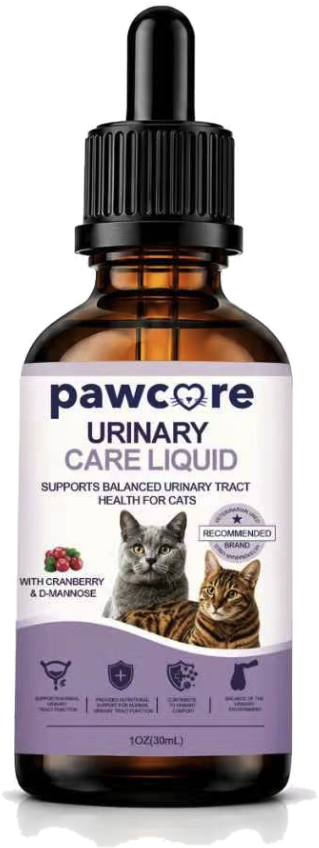
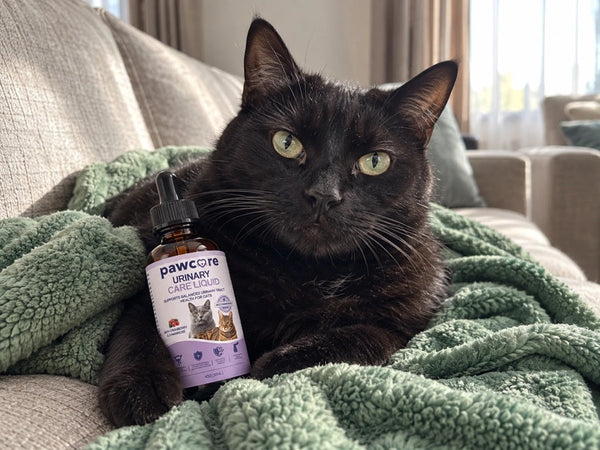
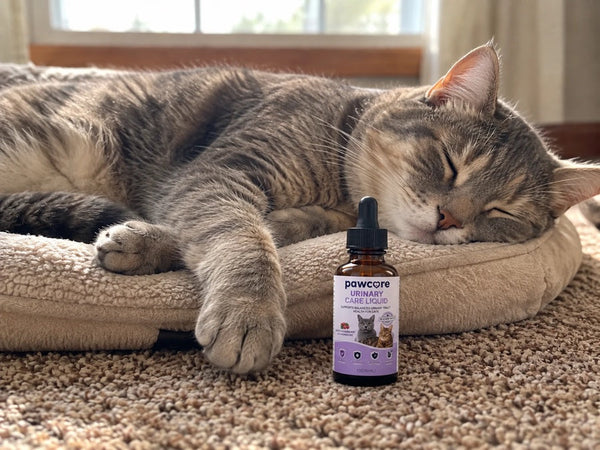
The formula cat owners have been turning to is Pawcore Urinary Support.
Built around N-acetyl glucosamine, the same building block studied in the Bangkok research.
It's a liquid. Not a pill, not a chew.
You add one dropper to your cat's wet food once a day. Most cats don't notice it.
It contains NAG to support the GAG layer as it rebuilds, plus L-theanine to take the edge off the stress that strips it. No other product I've found puts both in the same bottle.
Made for cats only. Not a dog formula, not a human formula, not a "one size fits all pets" blend.
90-day money-back guarantee.
If your cat isn't having fewer accidents and using his box more, you get every cent back.
What Owners Are Seeing
"My 14-year-old Barnaby had turned our dining room into a puppy pad zone. I was scrubbing rugs at 6 AM in tears. Two weeks on this broth, and he walked right back into his high-sided box. The ammonia smell is completely gone and I finally have my sweet boy back."
Eleanor T.
★★★★★
"The vet told us Cleo was just senile and to prepare ourselves. She was howling every time she went near the box and soaking our duvet. By week three, the crying stopped completely. She uses the box like a kitten again and sleeps curled on our pillows every night."
Marcus B.
★★★★★
"I was at my breaking point after finding another puddle on clean laundry. Jasper would sprint out of his box like it shocked him. After three weeks on this formula, he steps inside and uses it calmly. Not a single accident since."
Diane K.
★★★★★
"I dreaded waking up every morning knowing I would step in another cold puddle. I was terrified of what decision was coming for my 15-year-old girl. Four weeks in, every puppy pad is in the trash and she hasn't missed her box once. This gave us our life back."
Patricia M.
★★★★★
If Your Cat Is Showing These Signs Now
Peeing on the bed. On the couch. On the laundry. Right next to the box. Right in front of you. A clean urine test and a vet who says it's behavioral.
The research is consistent: the protective lining is the part nobody checks. And the earlier you support it, the better.
Rebuilding the lining won't make a 14-year-old cat young again. But "it's behavioral" was never the same as "nothing can help."
The owners who found that out almost all say the same thing.
I wish I'd found this before I bought the third litter box.
Pawcore Urinary Support is available at pawcore.com. 90-day money-back guarantee. Most owners are told to give it at least 4 to 8 weeks before judging.
Secure your cat's supply today
N-acetyl glucosamine (NAG), the building block from the research
Here's the honest math. You can buy a fourth litter box. Another month of Feliway refills. Another mattress. Or you can give his bladder the one thing none of those ever touched: the raw material to rebuild its lining.
He has slept next to you for twelve, fourteen, sixteen years. He deserves a better answer than "it's behavioral." Give him 90 days before anyone in your house says "shelter" or "it's time." If it works, you get back a dry bed, an open bedroom door and the cat you've loved for years. If it doesn't, you get every cent back.
Can anybody vouch for this? My 13-year-old has started peeing on our bed and the vet says he's "fine"...
Like · Reply · 👍 4 · 39 min
Mark Davies• 3 days ago
This is incredible. Our girl was peeing on the couch every other night. Three weeks in and she's back in her box like nothing ever happened.
Like · Reply · 👍 1 · 1 h
Patricia Wilson• 3 days ago
I wish I had found this sooner. We threw out a mattress before anyone told us about the bladder lining.
Like · Reply · 👍 2 · 24 min
Robert Thomas• 3 days ago
Bought this for my mom's 15-year-old cat. She was about to rehome him. In a few weeks he stopped going on her rugs and she's keeping him.
Like · Reply · 👍 6 · 1 h
Janice Miller• 3 days ago
Hey @sarah, this is what you need instead of buying another litter box
Like · Reply · 👍 2 · 2 h
Sarah Dudley• 1 day ago
Yes, I've been using this for two months. No more pee pads in the hallway and he sleeps on the bed again instead of in it. Life-changing.
Like · Reply · 👍 2 · 24 min
Dorothy Evans • 1 day ago
Just ordered mine! Praying this helps my sweet old boy.
Like · Reply · 👍 3 · 2 h
Susan Thompson• 2 days ago
I want to try this so bad, ordering as soon as I get paid!
Like · Reply · 👍 1 · 3 h
MEDICAL & HEALTH DISCLAIMER: The information and other content provided in this page, or in any linked materials, are not intended and should not be construed as veterinary advice, nor is the information a substitute for professional veterinary expertise or treatment.
If your cat has a medical concern, you should consult with your veterinarian or seek other professional veterinary treatment. Never disregard professional veterinary advice or delay in seeking it because of something you have read on this page or in any linked materials. If you think your cat may have a medical emergency, call your veterinarian or an emergency animal hospital immediately.

 Eleanor T.
 Marcus B.
 Diane K.
 Patricia M.